TL;DR:
- Most companies that call me want more customers.
- I look at the product, the market, and the business model around them.
- Often the problem is that you’re selling the wrong thing, to the wrong people, or explaining it the wrong way.
- I’m good at seeing the bigger opportunity in what you’ve already built.
Most people who call me want more customers.
But getting more customers doesn’t necessarily mean marketing harder. In the companies I’ve helped build, the biggest gains have often come from changing something more fundamental.
The best way to show you what I mean is with the companies themselves.
Monarchy
Eric Kim and I had worked together before. When he raised money to start a new company, he asked me to build it with him. He would handle denim, and I would handle tops.
This was the early 2000s, and he could see the market moving toward premium brands. His plan was to bring a premium look to the low-price model he already knew.
I thought the opportunity was bigger than that.
What we had was a killer brand name. Monarchy. Great name. So I put it everywhere and went looking for the best washes, prints, embroidery, and treatments I could get my hands on.

By the time we got to Las Vegas for our first big trade show, it was obvious this was not a cheap clothing line anymore. We had to triple the prices.
It was a massive success.
Our little booth was surrounded by buyers. Before long we were constantly in magazines, stocked by stores I had admired for years, and I would regularly see people around Los Angeles wearing something I had designed. Super fun.
The important part, looking back, is that we didn't find a more clever way to sell the original idea. We changed who it was for, what we were selling them, and what they would pay for it.
Truflation
I spent the next several years running a branding studio, which gave me countless repetitions of the same basic problem from different angles.
Then Stefan Rust asked me to help him launch a stablecoin.
This was around the start of Covid, and I was certain money-printing was going to lead to skyrocketing inflation. I told him I thought the stablecoin should track the cost of living instead of the dollar.
He agreed, and I shut down my studio to join him.
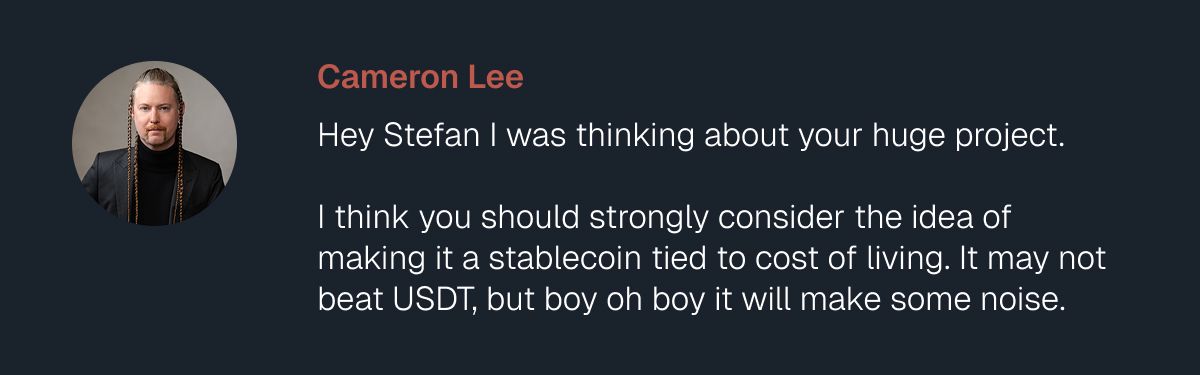
We went deep on how inflation was measured and started building our own index. Before long we had a very strong inflation index and no stablecoin.
Yield-bearing stablecoins were still technically difficult, so Stefan suggested we break the index out as its own product.
That turned out to be the company.
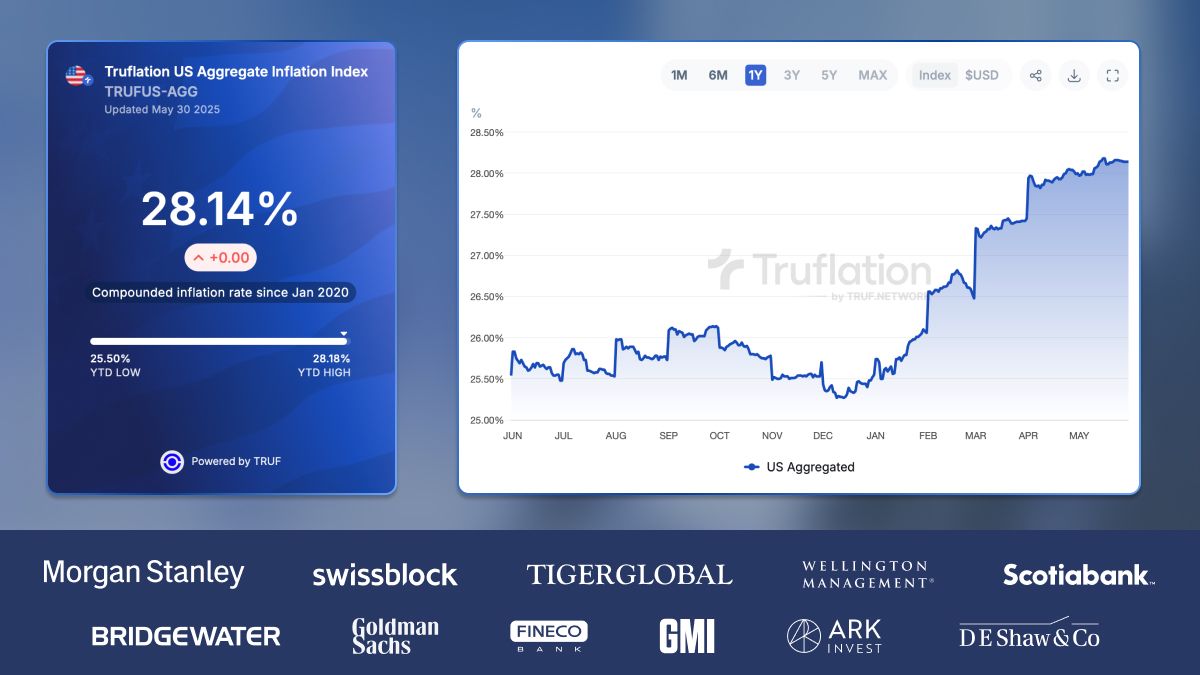
Chainlink and Coinbase were early supporters. Today Truflation is used by major US institutions, appears on the Bloomberg Terminal, and has been cited by the US Treasury Secretary before Congress.
Again, what changed the company wasn't a better way to sell the original product. It was realizing that something we'd built along the way should become the company.
The Pattern
No two companies are the same, but I keep ending up with the same task: figuring out what needs to change for the market to respond differently.
Sometimes it's who you're selling to. Sometimes it's what you're selling, how you frame it, or how you get it in front of people. Sometimes it's pricing, economics, or capital.
Where the opportunity lies is annoyingly inconsistent.
What is consistent is that I'm willing to throw out the existing assumptions and look at the problem from scratch. I get close to how the business actually works, then try to see it without the assumptions that have accumulated around it.
Sometimes the shift is something I bring in from outside. More often, the pieces are already there; the work is putting them together differently.
I wish there were a framework I could package up and sell for $97, or an AI skill I could throw on GitHub, but there isn't.
There’s no framework. I follow the problem wherever it leads.
Work In Progress
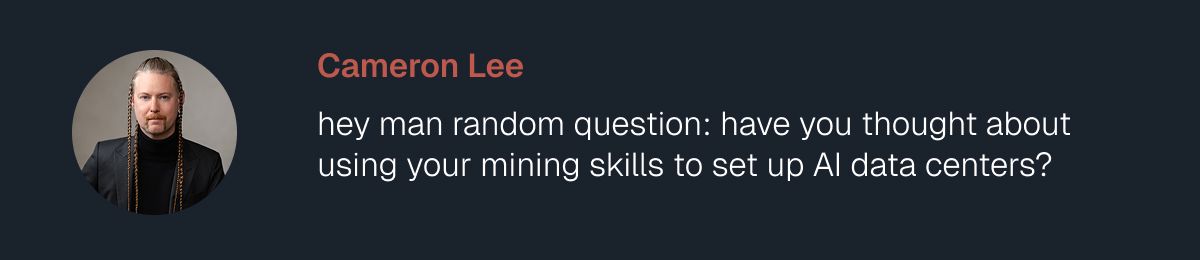
Earlier this year I went deep into AI, from the models all the way down to infrastructure. That led to a conversation with a friend who had spent years in Bitcoin mining. We started asking how his experience might translate into AI infrastructure.
This one was harder.
Infrastructure is brutally competitive. I changed the positioning, the customer, the product shape, the price point. Everything still looked like a good business, but not a great venture.
The unlock eventually came from somewhere I probably wouldn't have looked ten years ago: finance. After a decade around crypto and decentralized finance, I had a different set of tools.
Once we changed the capital model, the whole opportunity looked different.
That was the breakthrough.
There is no success story for this one yet. We're still getting started. But this is what the work feels like from the inside: I keep digging until the pieces click into place.
Then I know.
The company comes into focus and the path forward becomes obvious.
That moment is the job. The neocloud is just the most recent place it happened. But it always starts the same way: somebody sees an opportunity and asks me to help make it work.